Untitled-3

Thursday, 16 April 2015

Kids and Parents Learning Math: Together

After browsing through a number of math homework forums, there is a pattern. Parents have having difficulty with their kids math homework.

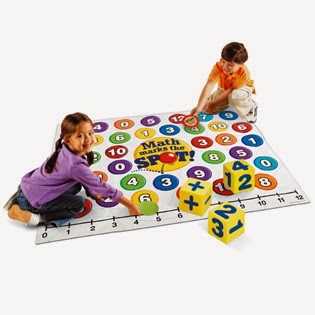
Math games are beneficial for kids and parents. Many parents can add and subtract. Is basic addition and subtraction good enough? Can you consider probability and plan ahead your next move? It is likely that many adults would have fun playing the same games as their kids.
Simplified Objective
The objective of the game is to collect numbered cards from 2-10 in order which add up to more than 20.
Challenge
The problem is that for each coloured section, it might not be possible to collect numbered cards up to 20, which results in a penalty. To manage your cards, while adjusting your strategy based on your opponents moves, and the number of cards left in the draw pile.
Positive Attitude Towards Mathematics
This game presents mathematics with a story, and is played within a framework. By being creative, you will learn that there is not just one correct way to be successful at this game.

Number Sense & Numeration
The problems change as the cards are laid, requiring the players to adjust strategies and re-calculate
Data Management & Probability
Keep track of your cards (Manage your colour sections based on the cards you and your partner have. Memorizing and Counting Cards- Plan your moves based on the probability of making your goals.
Know more about Primary School Maths.

Fun Ways to Teach Your Kids Math

Children are like sponges. They absorb every bit of information that is given to them, especially if it is presented in a fun and easy to learn way. It's never too early to begin teaching the concepts of math to your children. Opportunities for math abound in our everyday lives. Once you begin to notice them, you'll soon be guilty of seeing math in everything you do!
Story time with your child is an excellent starting point. Virtually any book that you choose to read will have countless opportunities for math discussion. If you are reading 'The Three Little Pigs', don't just breeze through it. Make sure that you stop on every page and give your child time to absorb the pictures. Ask questions about what they see, but be sure to offer constant encouragement even if they give an incorrect answer. The key to learning is to constantly provide a positive experience. By doing this, your child will always be eager to learn. As you look at the pictures with them, ask questions such as, "How many pigs do you see on this page?" or "How many apples are on this tree?" If your child seems stuck, happily count out loud for them. As a general rule, count everything you see, literally. You can count the stairs as you climb them, or the socks as you are taking them out of the dryer together. The opportunities are endless. Is your child a picky eater? Try saying, "Just take five more bites and you will be done", and then of course count them out.
Playing capacity games while you are cooking is both educational and extremely fun. Your child will love pouring liquids from one container to another. Prepare them for learning measurements by asking them which container can hold more or less, and by letting them handle the different measuring cups, spoons, etc. Amaze them by doing special tricks, like pouring a cup full of cereal into a measuring cup, then crushing it and then presenting the new compressed, much smaller measurement.
Playing pattern games helps prepare your child for the concepts they will need to grasp in school. If your child eats Fruit Loops or M&M's, help arrange them in different colored rows. After this is mastered, put down a pattern, such as one green M&M, one red M&M, and then one more green M&M. Ask your child to show you what color comes next. You can play pattern games with colored clothespins, different shaped blocks, colored socks, etc. The more you play this game with your child, the more variations of the game you will discover.

Play subtraction games at snack time. If your child likes goldfish crackers, you can draw a fish bowl on a piece of paper. Place ten or twelve goldfish crackers on the paper so they are 'in the fish bowl'. Have your child count them at the beginning and then tell you how many are left every time they eat one, or two, or three. This will teach your child the basic concept of subtraction while providing them with a fun snack time experience.
Regardless of what approach you take to incorporate math in your child's life, realize that you are laying a foundation for their future interest or indifference to the subject. Keep it simple, don't stress, and remember to move on to something else as soon as your child loses interest. Learning is fun, and helping your child to enjoy early learning experiences in a playful manner is one of the best gifts you can give them.
Please visit here for more info about Maths Is Fun.

Kindergarten Activities - Creative Kids Math

How do you identify creative kids?
1. They are imaginative, resourceful and uninhibited.
2. They are open to new ideas and see things in a different way.
3. They are curious, alert, and adventurous and risk taking.
4. They are independent in thinking and social behavior.
5. They are inventive and good at solving problems.
6. They love challenges and are easily bored with routine and mundane tasks.
Kindergarten Maths activities which develop creative thinking encourage the kids to think critically, using their existing knowledge to explore new ways of thinking. We can incorporate language, music or math into these activities and for this article we will discuss on using math to develop creativity.
Whenever the word math is mentioned, numbers and formulas come into the picture. Math is more than just number crunching but when it is being introduced to kids creatively, can improve skills like reasoning, logic and problem solving and also widen the kids understanding of Math to a wider scope as listed below:
1. To enable the kids to sort objects in a logical series according to size, shape or any other characteristic.
Find objects of different shapes like a book, a clock, a piece of sandwich or pizza, a photo frame, a ball, a pencil case. Put them together and ask the child to group them according to their size. For example a book is a rectangle, what other objects here are rectangle shapes.
You can invent different kindergarten activities by finding objects of different sizes or talk about animals and ask them what animals are big and small.
2. To enable the kids to understand the concept of numbers by letting them have direct experience with objects as the kids will discover that numbers are not just digits but extend to our everyday lives.
Kindergarten activities which kids under five need are songs, rhymes and finger plays that include numbers like Little Indian Boys/Girls, while singing, finger play with them, show your fingers while singing One Little, Two Little, Three Little Indians and so on.
You can also ask questions like - Mummy bought 5 apples and put them in the refrigerator yesterday. You ate one apple and Daddy ate two, so how many apples are in the refrigerator now? Allow the kids to answer and ask them to check the refrigerator to see whether they are correct.
3. To develop their spatial skills by discovering how to fit things together, take things apart, rearrange things and navigation.
Kids with well developed spatial skills are very creative, dramatic, artistic and musical. Some kindergarten activities which encourage spatial skills are playing with Lego, tangram, mazes, play dough and chess.
Engage your kids in creative thinking activities the whole day while you are preparing your meals, gardening or clearing your laundry by asking open-ended questions which are worded in such a way that there is no one correct answer. An example is while clearing your groceries asks your kids what they can do with this tomato. Open-ended questions like this engage the kids in divergent or creative thinking to come up with a whole range of brilliant and imaginative ideas.

5 Benefits When Kids Math Games Are Made Funny For Kids

Understanding math concepts do not just involve practice but is a developmental process as it is understanding the concepts and applying them to the environment and your daily lives and teaching these concepts can be made more enjoyable, funny and lively for your kids when you know how to inject some humor, fun and creativity into the games.

Try these funny kids math games -
1. Clown bowling game
Draw several simple clown faces and write numbers 1 to 10. Paste them on empty water bottles. Place these bottles in a row like bowling pins. Say out an addition problem - What is 2 + 2? The kid will have to aim the answer with a ball and do a victory dance when the kid bowls the correct answer.
2. Rocks, paper and scissors
Write numbers from 1 to 20 and place them on the floor. Break the kids into two groups and each group stand at the end of the row of cards. The kids are required to jump over one card at a time and while jumping over the card must call out the number written on the card. When the two kids meet, do rock, paper and scissors. The kid who loses leaves and is replaced with another kid from his team to continue where they have stopped but the kid who wins continues the game. The kid who reaches the end of the row of cards wins.
When Primary School Maths games are made funny for kids, your kids will be reaping the following 5 benefits -
1. When kids enjoy the funny games, making them laugh, carbon dioxide are driven out of the body and is replaced by oxygen-rich air thus boost immunity and helps the kids to relax and reduces their stress level.
2. Laughter and fun provides the kids to express their developing powers of reasoning and creativity and they will learn and retain more of what is being taught to them.
3. When kids are exposed to the funny side of math which is always perceived to be a rigid and boring subject, stretches their imagination to think out of the box and learning to look at the problem differently to come out with different creative ways to solve the problem.
4. When kids laugh at funny games helps to break the ice and encourage them to interact with each other, develop their social growth as they learn how to get along with others and work in groups.
5. When humor is incorporated into kids math games, it enriches the learning process as when the serious learning is made funny and playful, the kids interest is intensified making them more attentive listeners, willing participants and sharp observers and their love to learn more of math will grow.

When kids are playing and exploring in enriched environment that is fun, humorous, playful and at the same time of educational value serves to support your kids in their cognitive thinking skills, motor skills as you need muscles to laugh and their emotional skills that is they feel happy while learning and that learning is fun.
Cli

Monday, 13 April 2015

Overview Of The Maths Grading System In Singapore

http://eimaths.com/
The grading system in Singapore differs among schools basing since different institutions have different systems and foci. The grading systems at the primary, secondary and junior college levels are the ones that are mostly based on the local grading system. Maths is one of the important subjects that students need to pass if they want to be assured of good grades in their overall performance. For those who find difficulty in understanding this subject, a maths tuition will be very important to help them grasp the concepts that seem hard when they are in class.
In primary education, the grading system requires a student to score at least 91% to have an A grade in any subject. At O level, a student will be required to get at least 75% to be able to have an A1 grade. At junior college level, getting an A grade requires a student to have at least 70% score in a subject. This just shows how special attention should be paid especially in maths if a student wants to perform well in it as well as in his or her overall performance.
For some students, just hearing the word maths is enough to make them go crazy. But since the grading system cannot be altered because other students may not be so good in maths, there is no escaping but just to device mechanisms that will help the students improve their performance. Maths is a subject that nurtures students to be sharp especially in their critical thinking skills, but at the same time it can be nerve wrecking. Maths tuition will help children understand maths in a fun manner. It also helps sharpen the students in the areas that they are weak because it is most unlikely that they are not good in every area.
The Singapore educational system gives math an evident and intentional importance. Every student has to take maths at primary and secondary levels of education, so they have no option but to be good at it if they want the maths grading scale to favor them. Parents have the responsibility to make sure that their children are performing well in maths. When they notice that their children's grades in this subject are declining, hiring a maths tutor will be the best way to help them improve. A maths tuition will simplify the maths and help the students to develop interest in numbers as a result of the interesting teaching mechanisms employed by tutors.
http://eimaths.com/
 Math tuition can help in preparing students at all levels of education. When you start hiring a maths tutor when the children are still at lower education levels such as kindergarten and primary, it will help them to develop a liking for the subject at early stages. This will help prepare them for the toughest competition that lies ahead of them as they progress towards higher levels of education. Since the maths grading system is not going to change to favor underperformers, a math tuition will be really important in making the students understand concepts repeatedly and score good grades not only in maths but in all of their overall performance.
Click here to know more about Singapore Maths.

Thursday, 9 April 2015

It Takes Creativity To Be Smart

http://www.eimaths.com
The ultimate goal of education is to be able to solve problems in the real world. For many young children this has meant entering the empirical world of hard core academic training at a very young age. Parents who fear their children will not be able to compete unless they learn reading and arithmetic early in life, are pushing their children into academics when they are very young. These parents believe that their children will fall behind in elementary school if they are not exposed to "drill and test" programs in their preschools.
The problem with this line of thought is that it is just plain wrong. Children who are forced to memorize rather than rationalize will be able to play back the information they received but will not be able to do anything creative with that information. Very young children are naturally curious and open to exploring the possibilities around them. If we fill them up with facts instead of encouraging creative exploration they will lose the ability to be creative with the facts we have given them. In other words it takes creativity to perform any kind of problem solving whether it is a math problem or a science problem.
Yet when we look at the preschool and elementary school world today we find fewer outlets for creativity and more "teach to test". We find less recess time, no art class, no music and no drama. For all the emphasis on teaching "the basics", I believe that academics are important, but studies show that this early emphasis on only hard core academics can result in poor academic performance when these children reach middle and high school. There are no studies that validate this push for early academics while there are studies that show the opposite.
If you want your child to be smart, you need your child to be creative. At these very young ages what your child needs is brain development activities not memorization. Young children need to learn how to recognize symbols and what those symbols stand for, to recognize the shapes of letters and numbers. Most importantly they need to understand that those letters and numbers are just symbols not reality. If they understand this their brains will be more open to thinking in abstract as well as factual reality.
As I said before it takes creativity to solve problems. It takes creativity to be comfortable facing a new problem and knowing how to approach solving it. If I know that 2 plus 2 =4 but I don't know how to imagine having 2 sticks and then picking up 2 more so I have 4 sticks, then it will be difficult for me to solve a "story problem" in my algebra class. The child needs to know the world is not black and white though the colors black and white do exist in the world. The child needs to know it is OK to take a risk and go outside the box intellectually, to solve a math problem by drawing on something learned while drawing or playing music. A creative child will sense the 'math' in art and music.
Know more about Creative Maths, Visit here.

Preschool Maths Cover More Than Just Counting

http://www.eimaths.com

Maths in all grades involve rationalizing, counting, and figuring out many aspects of nearly anything. Preschool maths involve setting the path for future learning in this regard, while maximizing on your child's earliest learning days.
It's not complicated to teach a child how to count from 1 to 10. For the best results later, having them able to make more of the numbers is the goal of preschool maths. Things such as two is more than one, and that there isn't fairness in two for them and one for me. They are quite capable of this learning at the preschool level though and it gives them a great head start on later maths.
Below are a few ideas that help children find preschool maths easier and give them an extra boost on the future. These are not only in preschool classrooms; rather they can be done at home as well.
Stars For Behavior
Many recall these charts often used to keep the class informed about who was the best in various ways. This enables the children to weight differences in quantity as a useful side effect. Counting and knowing more is a great way for learning preschool maths as well as behavioral understanding.
In addition these stars help provide the preschoolers to grow in areas where recognition among peers can be helpful. Maths at this level helps put the big picture together in the long run.
http://www.eimaths.com
The Family Bar Graph
Preschool classes will often ask each child to bring pictures from home of their family. From there they use a simple bar graph to make it visual. The bottom often has the number of family members, and the side being how many children in the preschool class have that many. These help instill some of the difference aspects of maths. Using the pictures for the vertical bars they can easily see where the most children fall. In the end, their will be the ability to see size from simple maths.
There a number of gaming and competitive ways this preschool activity can be used to make it more interesting. When it comes to the maths, it will have them comparing sizes as well.
Friendship Mix
This concept can go a long way in preschool in the areas of sharing, maths, simple counting, and more. Just like other mixes you can buy at the stores, the preschool children are each given a bag of a different dry snack. Each is then asked to put five pieces in front of them at a time from their bag. A bag is passed of which each puts their 5 in, and passes it onto another student with something different to do the same task with. They repeat this for bags for each student in the class.
The resulting mixed backs of snacks give them practice counting, seeing sizes grow, and teamwork. In the end they take them home for a snack!
Other Practice
There are many ways to help learn preschool maths. You don't need expensive education resources. Anything can do, such as cans, bottles, boxes, and anything else that can be stacked. Building towers will enable them to see growth in numbers. Beyond preschool maths they will begin more extensive use of the skills they have developed here.
Click here to know more on  Maths Activity Class.