Untitled-3
Showing posts with label Kindergarten maths. Show all posts

Thursday, 16 April 2015

Kindergarten Activities - Creative Kids Math

How do you identify creative kids?
1. They are imaginative, resourceful and uninhibited.
2. They are open to new ideas and see things in a different way.
3. They are curious, alert, and adventurous and risk taking.
4. They are independent in thinking and social behavior.
5. They are inventive and good at solving problems.
6. They love challenges and are easily bored with routine and mundane tasks.
Kindergarten Maths activities which develop creative thinking encourage the kids to think critically, using their existing knowledge to explore new ways of thinking. We can incorporate language, music or math into these activities and for this article we will discuss on using math to develop creativity.
Whenever the word math is mentioned, numbers and formulas come into the picture. Math is more than just number crunching but when it is being introduced to kids creatively, can improve skills like reasoning, logic and problem solving and also widen the kids understanding of Math to a wider scope as listed below:
1. To enable the kids to sort objects in a logical series according to size, shape or any other characteristic.
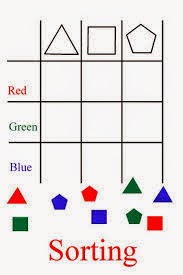
Find objects of different shapes like a book, a clock, a piece of sandwich or pizza, a photo frame, a ball, a pencil case. Put them together and ask the child to group them according to their size. For example a book is a rectangle, what other objects here are rectangle shapes.
You can invent different kindergarten activities by finding objects of different sizes or talk about animals and ask them what animals are big and small.
2. To enable the kids to understand the concept of numbers by letting them have direct experience with objects as the kids will discover that numbers are not just digits but extend to our everyday lives.
Kindergarten activities which kids under five need are songs, rhymes and finger plays that include numbers like Little Indian Boys/Girls, while singing, finger play with them, show your fingers while singing One Little, Two Little, Three Little Indians and so on.
You can also ask questions like - Mummy bought 5 apples and put them in the refrigerator yesterday. You ate one apple and Daddy ate two, so how many apples are in the refrigerator now? Allow the kids to answer and ask them to check the refrigerator to see whether they are correct.
3. To develop their spatial skills by discovering how to fit things together, take things apart, rearrange things and navigation.
Kids with well developed spatial skills are very creative, dramatic, artistic and musical. Some kindergarten activities which encourage spatial skills are playing with Lego, tangram, mazes, play dough and chess.
Engage your kids in creative thinking activities the whole day while you are preparing your meals, gardening or clearing your laundry by asking open-ended questions which are worded in such a way that there is no one correct answer. An example is while clearing your groceries asks your kids what they can do with this tomato. Open-ended questions like this engage the kids in divergent or creative thinking to come up with a whole range of brilliant and imaginative ideas.

Thursday, 9 April 2015

Set the Stage for Success with Kindergarten Math

For many children, kindergarten offers their first real introduction to mathematical concepts. At this critical age, there's a lot to be learned. However, children are like sponges at this age, so it pays to introduce as many concepts to them as possible. Even if your child receives plenty of individual attention in the classroom, there's no substitute for working with him at home too. One-on-one help is great, but online kindergarten maths games are worthwhile options to consider too. Kids love to play games on the computer, and there are plenty of well-designed online math games that will provide real learning benefits for your child. By starting your child with these games now, he'll have an easier time learning and developing new math skills later.

A Fun Introduction to Mathematical ConceptsStudies have shown that kindergartners tend to thrive in situations that encourage interactive learning. Even in small classrooms, however, it's not always easy to provide truly interactive math experiences. Kindergarten math games are specifically designed to make the most of interactive play. Your child will be engrossed in these games because they revolve around his input. Today's best online math games also adapt to meet the needs of your child. They provide the perfect mix of challenging problems and fun, familiar concepts that boost confidence. You can feel good about having your child play these games because he'll be learning while he's having fun. 


Develop Critical Math Skills through Interactive GamesWhen it comes to kindergarten math, there are many important concepts that need to be conveyed. At this stage, your child will be more inquisitive and curious about the way in which numbers work. High-quality online math games make the most of this natural tendency. Your child will also be more detail oriented, which paves the way for learning more involved concepts. A great online game will keep your child's abilities in mind so that he never feels overwhelmed or underwhelmed. By striking the perfect balance, these games make the most of your child's natural tendencies.

In order to succeed with math later in life, your child should have a firm grasp of several key concepts by the time he is finished with kindergarten. Computation, number sense and sorting abilities are all extremely important. Your child should also be honing his problem-solving capabilities during this year. On top of that, you should encourage your child to contrast and compare different numbers and other mathematical concepts. The right game will address all of these critical concepts. You should also be able to monitor your child's progress with such games to ensure that he's moving along well. 

If you think that there's never any benefit to having your kindergartner sit in front of a computer, think again. This is one instance in which online games can actually provide exceptional benefits for your child. The right online kindergarten math game will dovetail nicely with the things that your child is learning at school. In addition to helping your child keep up, these types of games can help him move beyond basic kindergarten mathematics. After all, these games are designed to work well with your child's strengths and weaknesses. By the time he leaves kindergarten, your child may already have a firm understanding of first or second grade math.

Friday, 3 April 2015

Help Your Child Excel with Kindergarten Math Games

Whether your child is still in preschool or already attending kindergarten, there are plenty of advantages to introducing him to high-quality online kindergarten maths games. While there are plenty of mindless, low-quality games on the Internet, there are also plenty of well-designed options that can actually enhance your child's educational experiences. Today's involved parents are increasingly turning to interactive online games to give their children the edge that is needed to stay ahead of the curve. Of course, not all online games are created equal. It's critical to do plenty of research before choosing kindergarten math games for your child. Instead of feeling overwhelmed or unsure about how to proceed, you should check out the following information. It provides guidance about how to choose the best online math games for your kindergartner.

Interactive Play is Important
Many of today's parents will look back on elementary math and remember a lot of rote learning. Flash cards and multiplication tables were definitely the norm. However, several studies have shown that interactive play offers many prime learning benefits. Thanks to computer technology, it's easier than ever to offer interactive learning games for children. Not surprisingly, many of these games are geared towards today's kindergartners. Before you sit your child down in front of the computer, make sure that the kindergarten math games that he'll play are truly interactive. They will keep him engaged and will help him learn a lot more. 

http://eimaths.com/


The Benefits of Adaptive Learning
Just like developmental milestones, mathematical capabilities differ a great deal from one child to the next. Furthermore, some children learn at a higher rate of speed than others. This is why it's smart to choose online math games that offer adaptive learning. This means that they take your child's strengths and weaknesses into account. During game play, your child's abilities will be assessed. In turn, the right level of challenge will be presented to your child. Plenty of kindergarten math games offer adaptive learning features, but make sure to dig deeply to find the perfect option for your child.

Learning Should be Fun
When a child develops a genuine love of learning, he will have a much easier time educationally throughout his life. Naturally, a child isn't going to develop a love of learning if learning isn't fun. Online math games for kindergartners have to be fun if they're going to teach a child anything. Bright colors, fun characters and interesting challenges will keep your child interested and happy. You'll know you've found the right game when your child doesn't want to stop playing it. In addition to that, your child should never be bored. 

http://eimaths.com/

 
High-quality kindergarten math games can be extremely beneficial. That being said, you shouldn't select the first game that you find online. Some games claim to be educational but actually aren't. Others are poorly designed and may end up confusing your child more than anything. You don't want your child to feel overwhelmed, or he will develop a sense of dread for math. You don't want him to be underwhelmed or bored, or he will avoid math problems whenever possible. The right game will strike the perfect balance and will educate your child while keeping him happily entertained. It pays to search around for the perfect game, so start looking for one today.

Kindergarten Math Lesson Plans

Math lesson plans for kindergarten students makes learning math concepts simple, fun and experiential. It provides a solid foundation for children with each lesson either introducing a new math concept to students or developing the fluency in them in performing various math skills. Lessons are tackled with creative and interesting examples that come in colorful illustrations and photos. 

Below are some of the topics included in this publication:

Counting, Addition and Subtraction

Kindergarten students are introduced to the practice of skip counting and the skill of matching number symbols with their corresponding words. Activities are provided to help them gain a better grasp of addition and subtraction. One example is using numbers to demonstrate and solve story problems that illustrate these math operations. In addition, kindergarten math students will expand their skills in using the number line to represent numbers and model addition problems.

http://eimaths.com/tag/kindergarten-maths-2/

Patterns, Sorting and Ordering

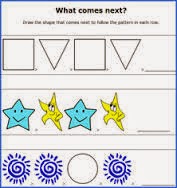
Comparing and ordering sets of numbers can be challenging but these will be simplified for students with the help of cardinal and ordinal meanings. They will also be taught how to recognize counting and non-counting patterns in objects. Remembering rules involving these concepts will be easier as they will be the ones to translate simple patterns into rules.

Presenting addition as a process of "putting together" or "counting on" is one of the key concepts lesson plans will give kindergarten students. This will help them see addition as a simpler process, while making them see the world around them in a different light.

Collecting and Measuring

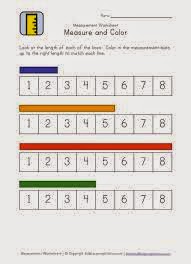
Through engaging in activities that present everyday objects, students will learn the skill of collecting and counting data. One example is using a tally sheet while taking a survey and, later, producing a graph with their collated information. Kindergarten students will further their skills in observation with activities related to measurement, particularly comparing and ordering measurable attributes of objects. This topic is taken a notch higher with the presence of word problems, which students will learn to solve through measurement and comparison of objects.

http://eimaths.com/tag/kindergarten-maths-2/


While kindergarten students will be asked to identify time and tell how long or how short objects are, lessons in measurement go beyond these activities. A good example is creating recipes for snacks, thus requiring them to quantify and measure ingredients.

Geometry and Symmetry

Shapes may not be new to kindergarten students, but the discussions applied in a lesson plan will give students a good introduction to the language of geometry. They will learn to interpret and describe the objects around them, especially with the lessons on two-dimensional and three-dimensional figures. The discussion of the latter, for example, will help children understand how objects around them move or operate. Lessons in this section will also lead them to the exploration of symmetry and spatial reasoning. The world of geometry will help kindergarten students enhance their critical thinking skills as they tackle problems involving shapes and spatial reasoning.

Kindergarten math becomes a series of fun and creative activities as students learn about numbers and figures with respect to their environment. With this education material, kindergarten students indeed become better detectives as they develop both their skills in critical thinking and their sense of wonder and imagination.

Thursday, 5 February 2015

Teacher knowledge: A crucial factor in supporting mathematical learning through play

This paper reports on the mathematical thinking taking place during play in a sessional kindergarten.  It identifies ways in which early childhood teachers can broaden their professional development in mathematics education, and indeed why many early childhood teachers might need to do so, in order to enhance the mathematical learning of their children.  Narratives in the form of learning stories, and photographs of the children at play, augmented and supported the findings of the investigation.

Introduction
There has always been an assumption that in the early years the initial stages of a child's mathematics learning can be seen through their play.  While the child learns by doing, however, the teacher teaches by knowing.  Therefore in order to maximise support of this early mathematical learning an early childhood teacher needs a thorough and extensive mathematical knowledge-base, coupled with theory and experience of appropriate professional pedagogy.  Too often the teacher is bereft of sufficient mathematical knowledge with which to fully employ appropriate skills and strategies needed to enhance mathematical knowledge for the child.

The significance of play in developing early mathematics understanding

Play creates a natural environment of discovery for children, allowing them to learn about themselves and the world around them.  According to Stone (1995) play is defined as an intrinsically motivated, freely chosen, process-oriented over product-oriented, non-literal, and enjoyable activity.  Play serves an important function in children’s holistic development, which includes physical, emotional, social and intellectual growth.  Through play children learn to think for themselves, to make choices and decisions, to reflect, and to tolerate uncertainty, thus enabling them to become more flexible and confident in themselves.  These are important and integral aspects of both the early childhood curriculum, Te Whaariki (Ministry of Education, 1996) and the national mathematics curriculum, Mathematics in the New Zealand curriculum (Ministry of Education, 1992).

Pound (1999) believes the thinking in action which occurs in play forms a rich foundation for the more subject-specific problem solving, mental imaging and recording, in mathematics education, that can develop from play.  Much of what young children learn is incidental, or natural, and happens through their play.  They also observe adults using mathematics for meaningful purposes, and begin to use number and other mathematical concepts themselves as part of their everyday lives.

Young children as problem solvers

Mathematical know-how is the ability to solve problems which require some degree of independence, judgement, originality and creativity, as well as the ability to solve routine problems (Polya, 1995 cited in Pound, 1999).  Mathematics, like all other human knowledge, is a consequence of social interaction.  It is a means, or framework, used to support ongoing enquiry into aspects of the world (Pateman & Johnson, 1990 cited in Steffe & Wood, 1990).

How children go about learning mathematics varies greatly from child to child according to cultural background, family orientation to mathematics, the child’s own disposition to learning, and teacher confidence.  Carr (1999) writes of children’s emerging working theories about what it is to be a learner, and about themselves as learners.  She had earlier developed the idea that the working theories were made up of packages of learning dispositions and defined such dispositions as "habits of mind", or "patterns of learning".  She further developed a framework of learning dispositions (Carr, 1998), known as learning stories, closely linked to the strands of Te Whaariki  (Ministry of Education 1996).  The framework of dispositions included courage and curiosity, trust, perseverance, confidence to express an idea, and taking responsibility for fairness and justice.  In particular, these dispositions support quality mathematics learning through children’s engagement in the problem solving nature of the mathematical processes (Ministry of Education, 1992).

Teachers supporting early mathematics learning

Early childhood teachers have a vital role in the total educative process. Alexander (1997, cited in Pound, 1999: 35), believes teachers have a responsibility to make sure that the "imperatives of early childhood" are not lost among the noisy demands for early achievement.  Meade (1997) found, when referring to learning related to early literacy, early mathematics and reasoning, that most early childhood teachers opted for children to learn about these through play with little adult intervention.  Children, however, do not learn mathematics unless exposed to it, and thus it requires a teacher to have a commitment to both the pedagogical principles of early childhood and personal mathematical knowledge in order to provide mathematically rich environments which do not interfere with the child-centred nature of play.  As Haynes (2000: 101) says

It is personal knowledge and disposition which enables teachers to take a "national curriculum and turn it into a child’s curriculum". (citing Malaty, 1996).

The level of mathematical knowledge held by teachers might well vary, but, without the confidence and skill to interpret children’s activities in learning situations, the actual teaching will be less effective than it could be.  This comes down to how well the teachers themselves have been educated, which in turn depends upon the quality and focus of teacher education to which, as students, they were exposed.  Farquhar (1994) believes that improvement in the quality of early childhood education programmes can best come from the improved quality of teachers, a corollary of which is that only the best applicants should be recruited to teach young children.  Addressing a Teacher Refresher Course for early childhood teachers, Aitken (2000) pointed out that teachers all need highly developed skills, not just amateur understandings, if they are to analyse and respond effectively to each individual child or student’s learning capability and progress.  The importance of quality teacher education cannot be overlooked if teachers are to provide quality learning (Snook, 1992, cited in Farquhar, 1994).  Further to this, Evans and Robinson (1992, cited in Farquhar, 1994), asserted that early childhood teachers should be versatile, flexible and creative in order to effectively manage the multiplicity of their roles and relationships.  This would appear to be no less true in regard to mathematics learning than to other disciplines.

Teachers need to have the subject knowledge and teaching strategies which allow them to extend children’s foundational knowledge (Cullen, 1999).  Further, says Cullen, it is important for teachers to have confidence in their own knowledge of mathematics and to value the conceptual thinking that emerges through play, to recognise its potential for higher level thinking, and to take action accordingly.  Haynes (1999) states that theories about facilitating play are not sufficient: teachers need sound knowledge of mathematical concepts themselves in order to address the 'what' of mathematics teaching.  These observations complement the assertions of Farquhar (1994) and Pound (1999) that educating the educators is of paramount importance for optimal teaching outcomes at whatever level.  As well as teaching for learning, providers of teacher-education must be able to enthuse their students, to know their subjects, to have a sense of humour, and to have a high sense of self-esteem, according to McInerney & McInerney (1998).  Early childhood teachers, themselves, need a positive disposition towards mathematics in order to encourage children to think and reflect.  They need to be able to use their own ideas as a basis for getting children to think and reflect, and to create situations in which the children can gain an awareness of specific content.  Cullen (1999) believes strongly that young children need teachers who are immersed in subject-knowledge but are also able to impart their knowledge by developing reflective, analytical, creative and practical thinking about that knowledge-base.  This validates the appropriateness of Mathematics in the New Zealand curriculum (Ministry of Education, 1992), (MiNZC), as a framework for the development of mathematical concepts in early childhood through its emphasis on process as an integral part of mathematical learning.

Gathering the data

The study was conducted in the researcher’s own place of practice, a kindergarten, with 44 four-year-old children in morning session as subjects.  The kindergarten concerned is located in a middle-class socio-economic area in which all local schools are decile 10.  The children came from a variety of cultural backgrounds, although mainly from New Zealand Pakeha and Asian cultures.

The study began with observations, both written and photographs, of children at play in a variety of situations within the kindergarten.  The written observations were recorded as narratives in the form of learning stories (Carr, 1998).  Initially the aim was to look at five areas of play to see what was happening in each, and later to analyse the learning story to identify any mathematical thinking taking place.  This was to be further analysed and categorised according to criteria drawn from MiNZC (Ministry of Education 1992).  In the event, eighteen learning stories in nine areas of mathematics were completed, and each was then categorised against one of the five content strands of MiNZC (number, measurement, geometry, algebra, statistics).  In light of this, and the initial focus on a small number of areas of play, the investigation was extended further into most recognised areas of play in a kindergarten.  Another thirteen observations were made in these areas and analysed using the same criteria.

The researcher herself had trained as a kindergarten teacher thirty years previously, which was well before the implementation of both the national curriculum for early childhood education and the national mathematics curriculum.  While having worked with Te Whaariki (Ministry of Education 1996), she was actually unaware of the contents and components of MiNZC prior to undertaking the study

Summary of results

Every learning story identified some mathematical activity, thinking, and/or mathematical language within the play concerned. The seventeen areas of play observed were sand, science, puzzles, games, mat-time, outdoor adventure, see-saw, woodwork, family, dough, cooking, collage, music, water, blocks, pen and paper and hide and seek.  Table 1 indicates the instances of mathematical thinking observed across these areas of play grouped according to the content strands of MiNZC.


Table 1. Play observations and strands of MiNZC

All thirty one observations related to a specific MiNZC strand, and all but six indicated mathematical activity across a second strand as well, evidenced in the same observation.  This confirmed that concepts of level one mathematics are emerging through play before school.

Mathematical thinking associated with the number and measurement strands were predominant and the strands of mathematics do not occur in isolation is illustrated by the number of observations where instances of two strands were demonstrated.

A significant feature of this research was the analysis of the photographic records for mathematical content.  The various facial expressions of the children gave some indication of how the experience affected them during play, illustrating a variety of dispositions such as enthusiasm, curiosity and concentration.  Together with the written observations, they are indicative of the children's positive attitudes to mathematical exploration.  At this age most children are curious and experiment readily, but it has been demonstrated here that the actual breadth of mathematical learning depends upon the levels of enthusiasm and competence practised by the teachers.

Linking Te Whaariki and MiNZC

The study demonstrated a definite link between Te Whaariki (Ministry of Education 1996) and MiNZC (Ministry of Education 1992) with every play activity having at least one mathematics strand evidenced.  However, as Carr, Peters & Young-Loveridge (1994) point out, mathematics is not an isolated subject: it is but one part of the whole curriculum, and most of the time is not the focus of the play.  To illustrate this, one child, who was playing on the see-saw, used this activity in a manner that showed she knew how to experiment with weight in order to make the see-saw work for her.  This example also served to illustrate the problem solving underpinnings of both Te Whaariki and the mathematical processes of MiNZC: the child was constructing her own learning based on prior knowledge, understanding, trial and error, communication and experimentation in relation to context.  When she goes to school it is anticipated that this child will use and build upon all these strategies in future mathematics learning.  The kindergarten setting and programme based on Te Whaariki (Ministry of Education 1996) offers children time to choose, observe, listen, experiment, articulate, reflect, control, interact and work alongside other children and adults in ways that are basic to the play setting within the learning environment.

Teacher disposition to mathematics

From reflection on the ‘learning-by-doing’ displayed by the children a clearer perception emerged of what was being learned and how it was being learned.  Although the children were not taking part in a structured mathematics lesson, what they were in fact engaged in, on each occasion, was a play situation which promoted the basis for more formal learning at a later stage.  Learning almost anything is more effective when it is as contextually authentic as possible, but even more effective when the teacher can use the engagement and involvement aspect to help identify teachable moments in which to extend and cement specific learning.

Many adult acquaintances of the researcher, when spoken to about mathematics and the purpose of this research, spontaneously acknowledged that although they 'coped' at school and have since been able to do 'most' of the everyday calculations required for everyday living, their experience of learning mathematics imbued them with a sort of 'bogey' image of mathematics as a subject.  It seems that while many of the mathematics teachers were known to be good at their subject they were not always good at imparting knowledge.  It is probable that students who thought they were weak in mathematics made little progress because their actual abilities had never been identified and developed.  So again, the capacity of the teacher to indicate his or her enthusiasm for the subject, in terms which relate clearly to the level at which the children are at, is a significant factor in any discussion of teaching and learning mathematics.

It seems a logical corollary, then, that the teaching of mathematical concepts be focused on activities that engage and involve, rather than on more structured pedagogical processes, and certainly at kindergarten level.

Teacher education in mathematics

Throughout this study it became apparent that knowledge is a pre-requisite for effective teaching of mathematics in early childhood.  It is not only student-teachers who need subject education as provided at Auckland College of Education (Haynes, 1999) but also teachers in the field.  Coincidentally, during the study, two colleagues in the researcher's teaching team attended a half-day seminar on mathematics in early childhood education, an outcome of which was a new awareness and focus for the team to work at, discuss, and reflect upon. This may have strengthened the focus of the study and therefore also serves to illustrate that with on-going professional development for teachers in the area of mathematics education, it is possible that a more productive emphasis might well be placed upon mathematics as a programme component in early childhood settings.

Socio-cultural issues in mathematics education

Considering the smallness of the sample in the study no statistical significance can be attached to gender ratios, or to cultural differences.  However it is worthy of note that on this particular session there appeared to be more girls than boys who enjoyed meeting challenges that were actually mathematical in essence.  A third of the sample were of Asian origin, a cultural group believed to be positively oriented towards mathematics.  It is assumed that most Asian children are early imbued with a studious work ethic, regardless of actual or assumed ability.  Certainly the Asian children, on this session, when playing in the kindergarten environment, are always communicating with each other about their play.  Furthermore, observation suggests that it is girls who correct boys when mistakes are made, or who help when guidance is required.  It is of interest to note that, of the three teachers at this particular kindergarten, the teacher who is most aware of mathematical potential was educated in Taiwan.

Conclusion

The findings of this study clearly indicate that the incidence of four-year-old children successfully engaging in the concepts of level one (or even level two occasionally) in MiNZC (Ministry of Education, 1992) is not merely circumstantial and should not be overlooked.  An encompassing question for further investigation, suggested by this research, is whether the mathematical needs of children in the earlier years of their education are being adequately catered for.  As a corollary, now that MiNZC is ten years old, it seems timely to review the document in the light of its significance for early childhood education.  As evidenced in this study, the document does provide an appropriate framework for early childhood mathematics education but it is not often found in kindergartens.  Newly graduated teachers have copies whereas other teachers are required to purchase their own copies.

Throughout the relevant literature, and particularly during the course of the study itself, the most potent implication became the necessity for all teachers to have greater in-depth knowledge and understanding of mathematical content and processes, and to be confident in their use of mathematical language.  This was demonstrated through the researcher, herself: as her awareness of the mathematical significance of what the children were doing increased, so did the extent of her mathematical interpretation of their activity widen.  This led to a growth in enthusiasm and gave a new depth to the researcher’s teaching practice.

Our education system owes it to children to ensure provision of early childhood teachers well educated in mathematics to maximise the children’s learning in what must always be an essential learning area.  This study into early childhood mathematics education proves the point, and if this means that greater provision of professional development for early childhood teachers must be made, then so be it.  

References

Aitken, J. (2000, April). Probability or proof – inference or information. Paper presented to a Teacher Refresher Course Seminar, Dunedin, New Zealand.
Carr, M. (1998). Assessing children’s experiences in early childhood. Final report to the Ministry of Education on the Project for Assessing Children’s Experiences Part A and Part B. Wellington: Research Division, Ministry of Education.
Carr, M (1999). Being a learner:  Five dispositions for early childhood.  Early childhood practice, 1 (1), 81– 99.
Carr, M., Peters, S., & Young-Loveridge, J. (1994). Early childhood mathematics: Finding the right level of challenge. In J. Neyland (Ed.). Mathematics education: A handbook for teachers, Vol. 1 (pp. 271 – 282). Wellington:  Wellington College of Education.
Cullen, J. (1999). Children’s knowledge, teachers’ knowledge: Implications for early childhood teacher education. Australian Journal of Teacher Education, 24 (2), 15 – 25.
Farquhar, S. (1994, month unknown). Quality teaching in the early childhood sector. Paper presented at the New Zealand Educational Administration Society Winter Seminar Programme on Quality Teachers and Quality Systems, Auckland.
Haynes, M. (1999). The mathematical world of the infant and toddler. In Proceedings of the seventh Early Childhood Convention, Vol 2 (pp. 140 – 148). Nelson, New Zealand.
Haynes, M. (2000). Mathematics education for early childhood: A partnership of two curriculums.  Mathematics Teacher Education & Development, 2, 95 – 104.
McInerney, D., & McInerney, V. (1998). What makes effective teachers? Educational psychology: Constructing learning (2nd ed.). Sydney: Prentice Hall.
Meade, A. (1997). Good practice to best practice: Extending policies and children’s minds. Early Childhood Folio 3, 33 – 40.
Ministry of Education. (1992). Mathematics in the New Zealand curriculum. Wellington: Learning Media.
Ministry of Education. (1996). Te Whaariki: He Whaariki Maatauranga mo nga Mokopuna o Aotearoa. Wellington: Learning Media.
Pound, L. (1999). Supporting mathematical development in the early years. Buckingham, UK: Open University Press.
Steffe, L., & Wood, T. (1990).  Transforming children’s mathematics education:  International perspectives,  New Jersey:  Lawrence Erlbaum.
Stone, S. (1995). Wanted: Advocates for play in the primary grades. Young Children, 50 (60), 45-54.


Thursday, 29 January 2015

Benefits of Teaching Kindergarten Maths in Singapore

Post12 Endless Job Vacancies

One of the most prominent benefits of teaching kindergarten mathematics is the fact that there are many job vacancies for this position. While finding a suitable one may be rather quick than most teachers expect, they can always go on to find new and better ones if they are not satisfied with what they have found in the first place. This enables teachers to have a wide range of more options that they can choose from in both the short as well as the long run and for teachers, having more choices is always the best thing possible.

Good Salary

 On the other hand, teachers must be aware of the fact that teaching mathematics to children of this level tends to pay a lot more than many other jobs which are currently available in the present times. It is due to the fact that schools encourage teachers by paying more in order to make them give extra care and attention to children at this level since they are quite young and need all the training they need in order to understand the complex subject right from the beginning. With a chance of acquiring high end salaries monthly and yearly, teachers should definitely consider this job more than all the other ones out there.

Interesting

Furthermore, it is important to know that teaching maths to kindergarten students can be rather interesting. This is because of the fact that teachers often may find themselves teaching the same concepts to older children but with younger ones, it is always going to be something different and much more creative on a day to day basis. Because of this, every day routine is likely to become more fun and interesting, both for the teachers as well as the children who are always looking for more enjoyment most of the times.

Less Work & More Manageable

A huge reason for taking up the offer of teaching maths to students of this level is also because they are much more bearable and easily handled in comparison to children who are older. Young students are more likely to be sweet, understanding and hassle-free. While maths is a subject that is not loved by the older students as it gets tougher later on, children are more likely to be open to understanding it in a better way as at their level, the subject requires basic knowledge. Therefore, the work is likely to be less for teachers and handling children at this level is nearly not as difficult as most teachers may have thought in the first place.

The Verdict

Keeping all these exclusive benefits in mind, teachers should most definitely consider teaching mathematics to children of this level as it is not only fun but it also enables them to acquire a wide range of many other advantages which they simply cannot achieve by going for another kind of job. Hence, looking for job positions such as this one has been highly recommended to all those who are looking forward to teach maths at this level.

 Want to coach maths in preschool or Kindergarten in Singapore? Join us at www.eimaths.com

Friday, 26 December 2014

Teaching Primary and Preschool Maths Using Multiple Intelligences (PART 2)


Achievement Tests
At the end of the first three-week intervention period, pupils took a 25-item short answer review test on “Fractions”. At the end of every sub-topic on “Decimals” within the second six-weeks’ intervention period, pupils sat for a 25-item short answer review test.

Qualitative Data
Pupils’ interviews and teachers’ observations and reflection journals were also used as instruments for the qualitative data collection.
Procedure

The study was quasi-experimental in design and equivalent group post-test only design was adopted. One teacher taught the comparison classes and another teacher taught the project classes from the low and average-ability groups.

All the pupils and teachers involved in the project underwent MI diagnostic testing. The teachers were briefed on the findings and how it can help them to improve the way they learn and the way they help the pupils to learn. The project group teacher was given her class’s MI profile which showed the detailed intelligence variability within the class. This would help her to design and customize her Mathematics lessons to cater to the dominant multiple intelligences of the pupils in her two project classes.

Table 3 shows the results from the MIDAS Questionnaire which summarizes the MI profile of all the pupils. It indicated that pupils have all the eight multiple intelligences in almost equivalent dominance. The naturalistic intelligence was the strongest intelligence overall. All of the pupils’ intelligences were above the 50th percentile.

Scale
Natural
Musical
Spatial
Ling
Logical
Kin
Inter
Intra
Mean
55.9
54.1
53.8
53.8
53.1
52.9
52.0
50.8
SD
16.4
14.0
14.7
14.2
13.4
14.7
15.0
14.4
Table 3: Main Scale Means (N= 140)

Ability Group
Low-Ability Group
Average-Ability Group
Multiple Intelligence
Project
(N=30)
Comparison (N=32)
Project
(N=38)
Comparison
(N=40)
Musical
56.4 (12.1)
56.9 (14.7)
54.4 (12.4)
55.7 (16.1)
Kinesthetic
56.8 (11.4)
50.1 (14.2)
52.2 (15.9)
57.5 (14.5)
Logical
56.2 (12.4)
44.6 (13.3)
54.5 (14.0)
56.2 (12.8)
Spatial
58.8 (12.3)
52.6 (15.3)
54.2 (16.2)
56.0 (15.1)
Linguistic
53.3 (13.7)
51.0 (17.0)
54.8 (15.1)
57.2 (13.3)
Interpersonal
54.5 (13.1)
49.4 (16.4)
52.4 (17.0)
54.0 (14.3)
Intrapersonal
52.4 (12.1)
45.0 (12.5)
51.2 (16.1)
54.4 (14.7)
Naturalist
56.4 (16.7)
52.1 (16.4)
58.3 (17.9)
57.3 (15.6)
Table 4: Mean Score and Standard Deviation of Class MI Profile

Table 4 shows the MI profile of each of the project and comparison classes. The comparison group teacher was not given the results of his class’s MI profile. He was to carry out his Mathematics lessons using the traditional method of teaching.

The instruction for the two groups during the three-week treatment, varied in the following ways. The comparison group was taught the traditional method of “drill and practice”. The project group was taught the MI lessons daily where pupils were engaged in activities that encompassed all the eight intelligences. Pupils were taught using colourful and attractive visuals on power-point slides and were engaged in some of the following activities:

·         logic problems, reciting rhymes, raps and jingles
·         singing songs on mathematical concepts, constructing models, posters and number lines,
·         playing board games, “Bingo” and “Uno”
·         handling real life authentic manipulatives
·         working in pairs and groups
·          brainstorming and presenting their project work
·         Reflections on the day’s lesson in their journals.

The MI infused lessons on “Fractions” were crafted by the project group teachers. The comparison group teacher was not involved in the crafting the MI lessons so as to reduce threats to internal validity of the research project. At the end of the three-week treatment sessions, both groups were administered a review test on “Fractions”. The results from this post assessment would determine if the project group achieves a higher mean score than the comparison group. Fifteen pupils were selected at random from the project group to be interviewed to get their feedback on their MI infused lessons.

In the second semester, both the project and comparison groups were taught “Decimals” through MI infused lessons. The comparison group teacher was given his class’s MI profile which showed the detailed intelligence variability within the class prior to the six-week MI intervention. This would help him to design and customize his Mathematics lessons on “Decimals” to cater to the dominant multiple intelligences of the pupils. The pilot group teacher and the comparison group teacher crafted sixteen MI infused lessons on “Decimals”. Both groups were administered a series of four review tests. The results from these review assessments would reveal if the project group achieve a higher mean score than the comparison group due to the longer exposure to MI. Five pupils were selected at random from each class to get their feedback on their MI infused lessons. A focus group discussion among the project teachers was also conducted to get their feedback on the whole project.

PETALSTM was also administered before and after the intervention period. Post-test results of the project group would reveal if there is an increase in the level of engagement among pupils who are taught Mathematics using the MI strategies and if the longer exposure to MI has a positive impact on pupils’ engagement, motivation and attitude in the learning of Mathematics.


Results


Measure

Mean (SD)
Effect Size
Pretest
Post-test
PETALSTM Scale
Pedagogy
69.6 (16.6)
76.1 (15.8)
0.39
Experience of Learning
64.0 (19.3)
68.8 (18.5)
0.25
Tone of Environment
70.7 (13.7)
70.8 (19.5)
0.01
Assessment for Learning
67.1 (15.6)
73.8 (17.7)
0.43
Learning Content
66.3 (19.2)
75.6 (17.7)
0.48
Engagement Scale
Affective Engagement
76.4 (17.7)
81.1 (15.0)
0.31
Behavioural Engagement
75.4 (15.1)
78.1 (18.2)
0.18
Cognitive Engagement
72.4 (16.9)
77.0 (15.8)
0.27
Table 5: Mean comparison on pretest and post-test survey of the project group (N=68)

Table 5 shows results of engagement level among the two project groups. The results revealed a small to moderate effect size for Pedagogy, Experience of Learning, Assessment for Learning and Learning Content. The intervention had a higher impact especially on Assessment for Learning, and Learning Content.

The following graph shows the results from the review test on “Fractions”. There is a difference of 12.0 in favour of the project group. Thus, it may be concluded, with some degree of reservation, the MI intervention has a significant impact on the higher achievement among the project group pupils. Results indicated that the MI intervention seemed to have a greater impact on the low-ability pupils.


The following graph shows the results from the review tests on “Decimals”. There is a difference of 15.0 in favour of the project group. Thus, it may be concluded that a longer exposure to the MI intervention has a positive impact on the higher achievement among the pupils who were taught through MI strategies for nine weeks as compared to the comparison group pupils who were taught through MI strategies for only six weeks. Results also indicated that the MI intervention has a greater impact on the low-ability pupils.


Table 7 shows the motivational and attitudinal levels of the comparison and project groups. For all the ten items, the project group scored higher than the comparison group. This suggests that a longer exposure to the MI intervention has a positive impact on the motivational and attitudinal levels of the project group pupils who were taught through MI strategies for nine weeks as compared to the comparison group pupils who were taught through MI strategies for only six weeks. Results also suggest that the pupils were more influenced by exciting, interesting and challenging lessons.


Table 7: Comparisons on motivational and attitudinal level means
No.
Item
Project
group
Comparison group
Effect size
F1
I am excited about learning.
85.8 (17.4)
72.5 (22.1)
0.60
F2
I am interested in what is being taught.
84.1 (20.5)
69.6 (23.2)
0.61
F3
I like the subject.
83.1 (20.0)
74.1 (24.4)
0.37
F4
I like doing the activities.
83.2 (21.7)
75.9 (23.2)
0.31
F5
I want to learn more about this subject.
81.7 (18.0)
73.5 (24.7)
0.33
F6
I look forward to the lesson.
84.9 (22.2)
74.2 (21.1)
0.51
F7
I like learning because what I learn in class is useful.
79.0 (24.3)
70.0 (27.2)
0.33
F8
I will keep on trying even if the task is difficult.
79.8 (20.0)
69.7 (24.2)
0.42
F9
I like the challenging work given to us.
79.6 (22.5)
66.0 (27.5)
0.49
F10
I like learning because I can choose the task that I do best.
77.0 (22.6)
64.3 (25.8)
0.49

In addition to the quantitative data, feedback from the project group affirmed the improvement in attitude and the high motivation experienced by pupils from the MI infused lessons. Below is a blog entry by a pupil:

  • “We sang a lot of songs about decimals and fractions. It is very fun and interesting learning decimals and fractions. Our teacher teaches us different types of methods and using [attractive] power point [slides] to teach our class. I love Maths! It is really fun to learn! All the questions [are] like solving mystery cases! We also played Maths games to learn. Our teacher teaches us Maths in very fun ways. I love to play more Maths games and learn more about Maths! The Problem Sums are really challenging! Maths is Fun!”

Feedback from the project teachers further affirmed the improvement in attitude and the high motivation observed in pupils through the MI infused lessons. Below is a teacher’s reflection:

  • “I have seen for myself how planning a lesson that involves multiple intelligences actually makes the lessons more exciting for the pupils. Pupils can relate better, recall the learning points better, and on the whole, they are more motivated, even to do homework. By getting pupils involved through activities, songs, stories, and using powerpoint slides packed with cute pictures and animations, pupils actually looked forward to learning. This is true “Teach Less, Learn More” in action.”


Discussion and Conclusion

Based on the analysis of the data presented, it is seen that the MI intervention in the area of Mathematics has made positive contributions for the pupils’ engagement, motivation, attitude and achievement towards the learning of Mathematics. Pupils’ and teachers’ reflections support the statistical findings.

The findings obtained from this study, resembles other studies which evaluate MI instructional approach for the pupil success and attitudes. In a study by Cluck and Hess (2003), results showed improved assignment completion, class participation and engagement of learners using MI. Bednar, Coughlin, Evans and Sievers (2002) showed an increase in pupil motivation and positive attitude through the use of MI. In Douglas, Burton and Reese-Durham (2008), results showed considerable increase in academic performance on pupils taught through MI compared to those taught using the traditional method.   Three of the four improvements were observed: improved academic performance, greater impact on the low-ability pupils and behaviour improvements namely on pupils’ attitude and motivation in learning of Mathematics. Discipline problems tend to disappear, as reflected by the project teachers, when pupils are excited about learning in a fun filled lesson.

The success of the project led to a refinement of the prototype and an emergent model for “Teaching Mathematics through Multiple Intelligences” in West View. By 2010, all teachers were involved in infusing MI strategies in their Mathematics lessons. The significant improvement in the school’s Math PSLE results, an increase in percentage pass from 66.4% in 2009 to 81.1% in 2010, indicates that MI has positive impact in pupils’ academic performance. Pupils who were taught Mathematics through MI over three years (2008-2010) produced better PSLE scores than pupils who have not been taught through MI.

In closing, the most beneficial aspect of our research is that it takes into consideration human differences within the classroom and teaches the subject matter in a variety of ways appealing to all learners.

More preschool, Primary school maths experts on creative maths and Heuristics Maths, click here.


References
1.       Bednar, J., Coughlin, J., Evans, E., Sievers, T. May 2002. Improving student  
motivation and achievement in Mathematics through teaching to the multiple intelligences.
2.    Chapman, C. (1993). If the shoe fit…How to develop multiple intelligences in the
classroom. Arlington Heights, IL: IRI/Skylight Training and Publishing Inc.p.ix.
3.    Cluck, M., Hess, D., Improving Student Motivation Through the use of the Multiple         
             Intelligences. May 2003
4.    Douglas, O., Burton, K.S., Reese-Durham, N., The Effects of the Multiple Intelligence
Teaching Strategy on the Academic Achievement of Eighth Grade Math Students. Journal of Instructional Psychology; June 2008. Vol.35 Issue 2, p182-187, 6p
5.    Fredricks, J. A., Blumenfeld, P. C., & Paris, A. H. (2004). School engagement: Potential
of the concept, state of the evidence. Review of Educational Research, 74: 59 – 109.
6.   Gardner, H. (1991). The Unschooled  Mind: How children think and how schools should
teach.. New York: Basic Books.
7.  Gardner, H. (1993). The theory in practice. New York: Basic Books.
8.  Gardner, H. (1999). The disciplined mind: What all students should understand. New York: Simon and Schuster.
9.  Hoerr, T. (2002). Applying MI in Schools. Retrieved from
10.  Ministry of Education (2007), Mathematics Syllabus, Ministry of Education, Singapore.
11.  Pociask, A., Settles, J., Increasing Student Achievement through Brain-Based Strategies,
May 2007.
12.  Robinson, A., Silver, H.F., & Strong, R., (1995, September). What do students want and
what really motivates them? Educational leadership. [Online] Available
13.  Soh, K.C., Tan, C., Workshop on Action Research:Transforming Teachers to Action

Researchers.Educational Leadership 21. Hong Kong. 2nd edition 2008.