Untitled-3

Monday, 13 April 2015

Overview Of The Maths Grading System In Singapore

http://eimaths.com/
The grading system in Singapore differs among schools basing since different institutions have different systems and foci. The grading systems at the primary, secondary and junior college levels are the ones that are mostly based on the local grading system. Maths is one of the important subjects that students need to pass if they want to be assured of good grades in their overall performance. For those who find difficulty in understanding this subject, a maths tuition will be very important to help them grasp the concepts that seem hard when they are in class.
In primary education, the grading system requires a student to score at least 91% to have an A grade in any subject. At O level, a student will be required to get at least 75% to be able to have an A1 grade. At junior college level, getting an A grade requires a student to have at least 70% score in a subject. This just shows how special attention should be paid especially in maths if a student wants to perform well in it as well as in his or her overall performance.
For some students, just hearing the word maths is enough to make them go crazy. But since the grading system cannot be altered because other students may not be so good in maths, there is no escaping but just to device mechanisms that will help the students improve their performance. Maths is a subject that nurtures students to be sharp especially in their critical thinking skills, but at the same time it can be nerve wrecking. Maths tuition will help children understand maths in a fun manner. It also helps sharpen the students in the areas that they are weak because it is most unlikely that they are not good in every area.
The Singapore educational system gives math an evident and intentional importance. Every student has to take maths at primary and secondary levels of education, so they have no option but to be good at it if they want the maths grading scale to favor them. Parents have the responsibility to make sure that their children are performing well in maths. When they notice that their children's grades in this subject are declining, hiring a maths tutor will be the best way to help them improve. A maths tuition will simplify the maths and help the students to develop interest in numbers as a result of the interesting teaching mechanisms employed by tutors.

http://eimaths.com/
 Math tuition can help in preparing students at all levels of education. When you start hiring a maths tutor when the children are still at lower education levels such as kindergarten and primary, it will help them to develop a liking for the subject at early stages. This will help prepare them for the toughest competition that lies ahead of them as they progress towards higher levels of education. Since the maths grading system is not going to change to favor underperformers, a math tuition will be really important in making the students understand concepts repeatedly and score good grades not only in maths but in all of their overall performance.
Click here to know more about Singapore Maths.

Thursday, 9 April 2015

It Takes Creativity To Be Smart

http://www.eimaths.com
The ultimate goal of education is to be able to solve problems in the real world. For many young children this has meant entering the empirical world of hard core academic training at a very young age. Parents who fear their children will not be able to compete unless they learn reading and arithmetic early in life, are pushing their children into academics when they are very young. These parents believe that their children will fall behind in elementary school if they are not exposed to "drill and test" programs in their preschools.
The problem with this line of thought is that it is just plain wrong. Children who are forced to memorize rather than rationalize will be able to play back the information they received but will not be able to do anything creative with that information. Very young children are naturally curious and open to exploring the possibilities around them. If we fill them up with facts instead of encouraging creative exploration they will lose the ability to be creative with the facts we have given them. In other words it takes creativity to perform any kind of problem solving whether it is a math problem or a science problem.
Yet when we look at the preschool and elementary school world today we find fewer outlets for creativity and more "teach to test". We find less recess time, no art class, no music and no drama. For all the emphasis on teaching "the basics", I believe that academics are important, but studies show that this early emphasis on only hard core academics can result in poor academic performance when these children reach middle and high school. There are no studies that validate this push for early academics while there are studies that show the opposite.
If you want your child to be smart, you need your child to be creative. At these very young ages what your child needs is brain development activities not memorization. Young children need to learn how to recognize symbols and what those symbols stand for, to recognize the shapes of letters and numbers. Most importantly they need to understand that those letters and numbers are just symbols not reality. If they understand this their brains will be more open to thinking in abstract as well as factual reality.
As I said before it takes creativity to solve problems. It takes creativity to be comfortable facing a new problem and knowing how to approach solving it. If I know that 2 plus 2 =4 but I don't know how to imagine having 2 sticks and then picking up 2 more so I have 4 sticks, then it will be difficult for me to solve a "story problem" in my algebra class. The child needs to know the world is not black and white though the colors black and white do exist in the world. The child needs to know it is OK to take a risk and go outside the box intellectually, to solve a math problem by drawing on something learned while drawing or playing music. A creative child will sense the 'math' in art and music.
Know more about Creative Maths, Visit here.

Preschool Maths Cover More Than Just Counting

http://www.eimaths.com

Maths in all grades involve rationalizing, counting, and figuring out many aspects of nearly anything. Preschool maths involve setting the path for future learning in this regard, while maximizing on your child's earliest learning days.
It's not complicated to teach a child how to count from 1 to 10. For the best results later, having them able to make more of the numbers is the goal of preschool maths. Things such as two is more than one, and that there isn't fairness in two for them and one for me. They are quite capable of this learning at the preschool level though and it gives them a great head start on later maths.
Below are a few ideas that help children find preschool maths easier and give them an extra boost on the future. These are not only in preschool classrooms; rather they can be done at home as well.
Stars For Behavior
Many recall these charts often used to keep the class informed about who was the best in various ways. This enables the children to weight differences in quantity as a useful side effect. Counting and knowing more is a great way for learning preschool maths as well as behavioral understanding.
In addition these stars help provide the preschoolers to grow in areas where recognition among peers can be helpful. Maths at this level helps put the big picture together in the long run.
http://www.eimaths.com
The Family Bar Graph
Preschool classes will often ask each child to bring pictures from home of their family. From there they use a simple bar graph to make it visual. The bottom often has the number of family members, and the side being how many children in the preschool class have that many. These help instill some of the difference aspects of maths. Using the pictures for the vertical bars they can easily see where the most children fall. In the end, their will be the ability to see size from simple maths.
There a number of gaming and competitive ways this preschool activity can be used to make it more interesting. When it comes to the maths, it will have them comparing sizes as well.
Friendship Mix
This concept can go a long way in preschool in the areas of sharing, maths, simple counting, and more. Just like other mixes you can buy at the stores, the preschool children are each given a bag of a different dry snack. Each is then asked to put five pieces in front of them at a time from their bag. A bag is passed of which each puts their 5 in, and passes it onto another student with something different to do the same task with. They repeat this for bags for each student in the class.
The resulting mixed backs of snacks give them practice counting, seeing sizes grow, and teamwork. In the end they take them home for a snack!
Other Practice
There are many ways to help learn preschool maths. You don't need expensive education resources. Anything can do, such as cans, bottles, boxes, and anything else that can be stacked. Building towers will enable them to see growth in numbers. Beyond preschool maths they will begin more extensive use of the skills they have developed here.
Click here to know more on  Maths Activity Class.

Learning Math With Manipulatives Can Actually Help Make Math Fun For Kids

http://www.eimaths.com

Teaching math to kids can be one of the most difficult challenges a teacher or parent can face due to the varying differences in teaching methods and individual learning styles. For many, math is a dirty word, but it doesn't have to be. Learning math can actually be a fun subject that makes sense by using real-life examples and optional manipulatives. There are several Maths Activity Class that teach basic concepts through fun, everyday applications. Parents and teachers can use a math manipulative to visually illustrate fundamental math principles such as; simple number recognition and counting to word problems solved with pre-algebra for kindergarten kids through high school.
My own children were confused, bored and even afraid of math, but by using humorous, real-life fun with numbers I was able to teach my kids the fundamentals they were missing as well as opening doors to discover new tricks to help them with memorization. By building each new concept on the others, I was able to tap into my children's natural ability to remember and use what they learned. And I don't know about you, but word problems were always a challenge for me. Word Problems, cover a wide scope of mathematical skills and I have found incorporating both video tutorials with math manipulatives a very beneficial way to help teach my children how to solve pesky word problems.
So, how can using manipulatives or real-world items make learning math easier and more fun for kids? Take for example Kindergarten and first grade aged children; by using apples to teach fractions, or cars to serve as rulers, and a even a bear hunter who shares his snacks we are able to use household items and real-life fun to help your child engage in math. By starting early you can cover a complete list of concepts from top Math curricula like; number recognition, counting and sorting, and then using math manipulatives to reinforce concepts like addition, subtraction, place values, money, time, estimation and geometric shapes. What helps make this method so effective is that it taps into a child's visual and tactile recognition, which is a highly active part of a child's development, to help them remember.
http://www.eimaths.com
Math manipulatives lend themselves to a tactile and visual learning approach with the flexibility to handle multiplication, division (both long and short), estimation, mathematical properties, equations, factors, prime numbers, spatial relationships (like angles and coordinate planes), time zones, money, converting measurements, fractions, and a whole lot more. Using instructional video aids like MathTacular in conjunction with top elementary math programs, including Horizons, Saxon and Singapore math curriculums really takes the mystery out of more than 50 concepts.

Set the Stage for Success with Kindergarten Math

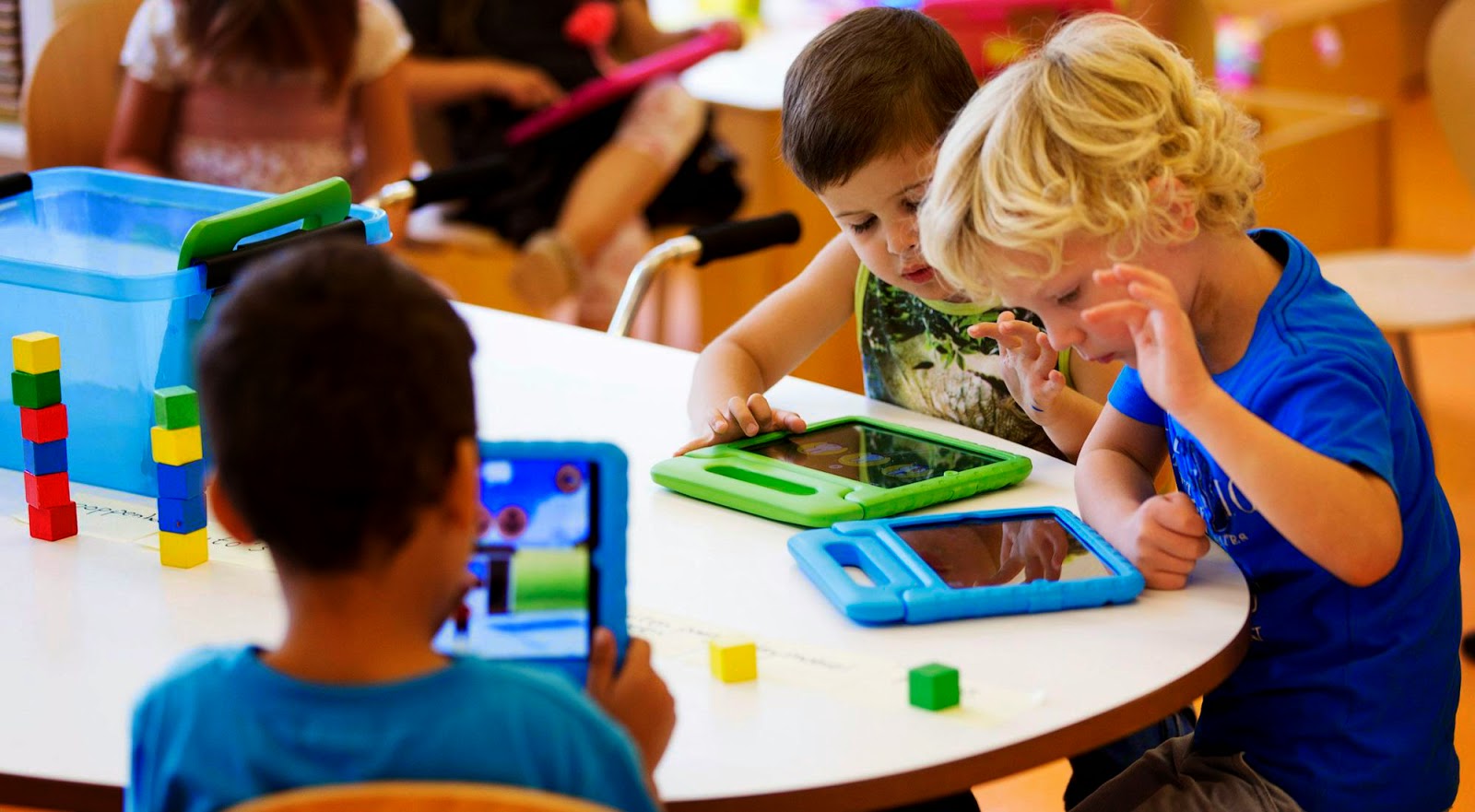
For many children, kindergarten offers their first real introduction to mathematical concepts. At this critical age, there's a lot to be learned. However, children are like sponges at this age, so it pays to introduce as many concepts to them as possible. Even if your child receives plenty of individual attention in the classroom, there's no substitute for working with him at home too. One-on-one help is great, but online kindergarten maths games are worthwhile options to consider too. Kids love to play games on the computer, and there are plenty of well-designed online math games that will provide real learning benefits for your child. By starting your child with these games now, he'll have an easier time learning and developing new math skills later.

A Fun Introduction to Mathematical ConceptsStudies have shown that kindergartners tend to thrive in situations that encourage interactive learning. Even in small classrooms, however, it's not always easy to provide truly interactive math experiences. Kindergarten math games are specifically designed to make the most of interactive play. Your child will be engrossed in these games because they revolve around his input. Today's best online math games also adapt to meet the needs of your child. They provide the perfect mix of challenging problems and fun, familiar concepts that boost confidence. You can feel good about having your child play these games because he'll be learning while he's having fun. 


Develop Critical Math Skills through Interactive GamesWhen it comes to kindergarten math, there are many important concepts that need to be conveyed. At this stage, your child will be more inquisitive and curious about the way in which numbers work. High-quality online math games make the most of this natural tendency. Your child will also be more detail oriented, which paves the way for learning more involved concepts. A great online game will keep your child's abilities in mind so that he never feels overwhelmed or underwhelmed. By striking the perfect balance, these games make the most of your child's natural tendencies.

In order to succeed with math later in life, your child should have a firm grasp of several key concepts by the time he is finished with kindergarten. Computation, number sense and sorting abilities are all extremely important. Your child should also be honing his problem-solving capabilities during this year. On top of that, you should encourage your child to contrast and compare different numbers and other mathematical concepts. The right game will address all of these critical concepts. You should also be able to monitor your child's progress with such games to ensure that he's moving along well. 

If you think that there's never any benefit to having your kindergartner sit in front of a computer, think again. This is one instance in which online games can actually provide exceptional benefits for your child. The right online kindergarten math game will dovetail nicely with the things that your child is learning at school. In addition to helping your child keep up, these types of games can help him move beyond basic kindergarten mathematics. After all, these games are designed to work well with your child's strengths and weaknesses. By the time he leaves kindergarten, your child may already have a firm understanding of first or second grade math.

Friday, 3 April 2015

Help Your Child Excel with Kindergarten Math Games

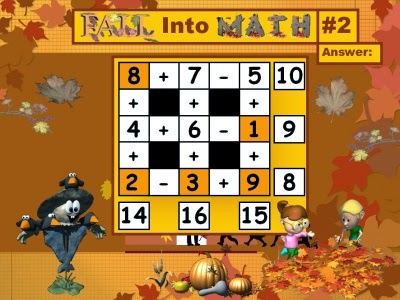
Whether your child is still in preschool or already attending kindergarten, there are plenty of advantages to introducing him to high-quality online kindergarten maths games. While there are plenty of mindless, low-quality games on the Internet, there are also plenty of well-designed options that can actually enhance your child's educational experiences. Today's involved parents are increasingly turning to interactive online games to give their children the edge that is needed to stay ahead of the curve. Of course, not all online games are created equal. It's critical to do plenty of research before choosing kindergarten math games for your child. Instead of feeling overwhelmed or unsure about how to proceed, you should check out the following information. It provides guidance about how to choose the best online math games for your kindergartner.

Interactive Play is Important
Many of today's parents will look back on elementary math and remember a lot of rote learning. Flash cards and multiplication tables were definitely the norm. However, several studies have shown that interactive play offers many prime learning benefits. Thanks to computer technology, it's easier than ever to offer interactive learning games for children. Not surprisingly, many of these games are geared towards today's kindergartners. Before you sit your child down in front of the computer, make sure that the kindergarten math games that he'll play are truly interactive. They will keep him engaged and will help him learn a lot more. 

http://eimaths.com/


The Benefits of Adaptive Learning
Just like developmental milestones, mathematical capabilities differ a great deal from one child to the next. Furthermore, some children learn at a higher rate of speed than others. This is why it's smart to choose online math games that offer adaptive learning. This means that they take your child's strengths and weaknesses into account. During game play, your child's abilities will be assessed. In turn, the right level of challenge will be presented to your child. Plenty of kindergarten math games offer adaptive learning features, but make sure to dig deeply to find the perfect option for your child.

Learning Should be Fun
When a child develops a genuine love of learning, he will have a much easier time educationally throughout his life. Naturally, a child isn't going to develop a love of learning if learning isn't fun. Online math games for kindergartners have to be fun if they're going to teach a child anything. Bright colors, fun characters and interesting challenges will keep your child interested and happy. You'll know you've found the right game when your child doesn't want to stop playing it. In addition to that, your child should never be bored. 

http://eimaths.com/

 
High-quality kindergarten math games can be extremely beneficial. That being said, you shouldn't select the first game that you find online. Some games claim to be educational but actually aren't. Others are poorly designed and may end up confusing your child more than anything. You don't want your child to feel overwhelmed, or he will develop a sense of dread for math. You don't want him to be underwhelmed or bored, or he will avoid math problems whenever possible. The right game will strike the perfect balance and will educate your child while keeping him happily entertained. It pays to search around for the perfect game, so start looking for one today.

Kindergarten Math Lesson Plans

Math lesson plans for kindergarten students makes learning math concepts simple, fun and experiential. It provides a solid foundation for children with each lesson either introducing a new math concept to students or developing the fluency in them in performing various math skills. Lessons are tackled with creative and interesting examples that come in colorful illustrations and photos. 

Below are some of the topics included in this publication:

Counting, Addition and Subtraction

Kindergarten students are introduced to the practice of skip counting and the skill of matching number symbols with their corresponding words. Activities are provided to help them gain a better grasp of addition and subtraction. One example is using numbers to demonstrate and solve story problems that illustrate these math operations. In addition, kindergarten math students will expand their skills in using the number line to represent numbers and model addition problems.

http://eimaths.com/tag/kindergarten-maths-2/

Patterns, Sorting and Ordering

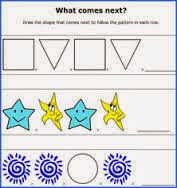
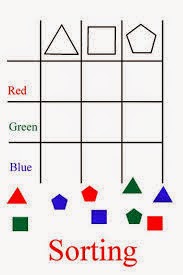
Comparing and ordering sets of numbers can be challenging but these will be simplified for students with the help of cardinal and ordinal meanings. They will also be taught how to recognize counting and non-counting patterns in objects. Remembering rules involving these concepts will be easier as they will be the ones to translate simple patterns into rules.

Presenting addition as a process of "putting together" or "counting on" is one of the key concepts lesson plans will give kindergarten students. This will help them see addition as a simpler process, while making them see the world around them in a different light.

Collecting and Measuring

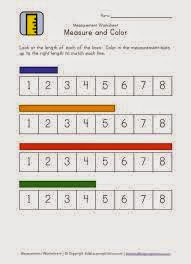
Through engaging in activities that present everyday objects, students will learn the skill of collecting and counting data. One example is using a tally sheet while taking a survey and, later, producing a graph with their collated information. Kindergarten students will further their skills in observation with activities related to measurement, particularly comparing and ordering measurable attributes of objects. This topic is taken a notch higher with the presence of word problems, which students will learn to solve through measurement and comparison of objects.

http://eimaths.com/tag/kindergarten-maths-2/


While kindergarten students will be asked to identify time and tell how long or how short objects are, lessons in measurement go beyond these activities. A good example is creating recipes for snacks, thus requiring them to quantify and measure ingredients.

Geometry and Symmetry

Shapes may not be new to kindergarten students, but the discussions applied in a lesson plan will give students a good introduction to the language of geometry. They will learn to interpret and describe the objects around them, especially with the lessons on two-dimensional and three-dimensional figures. The discussion of the latter, for example, will help children understand how objects around them move or operate. Lessons in this section will also lead them to the exploration of symmetry and spatial reasoning. The world of geometry will help kindergarten students enhance their critical thinking skills as they tackle problems involving shapes and spatial reasoning.

Kindergarten math becomes a series of fun and creative activities as students learn about numbers and figures with respect to their environment. With this education material, kindergarten students indeed become better detectives as they develop both their skills in critical thinking and their sense of wonder and imagination.